Doctorlib AI - Mobile UI/UX
Reimagining healthcare access in a future where AI becomes the first layer of diagnosis, recommendation, and medical gatekeeping.

About the Project
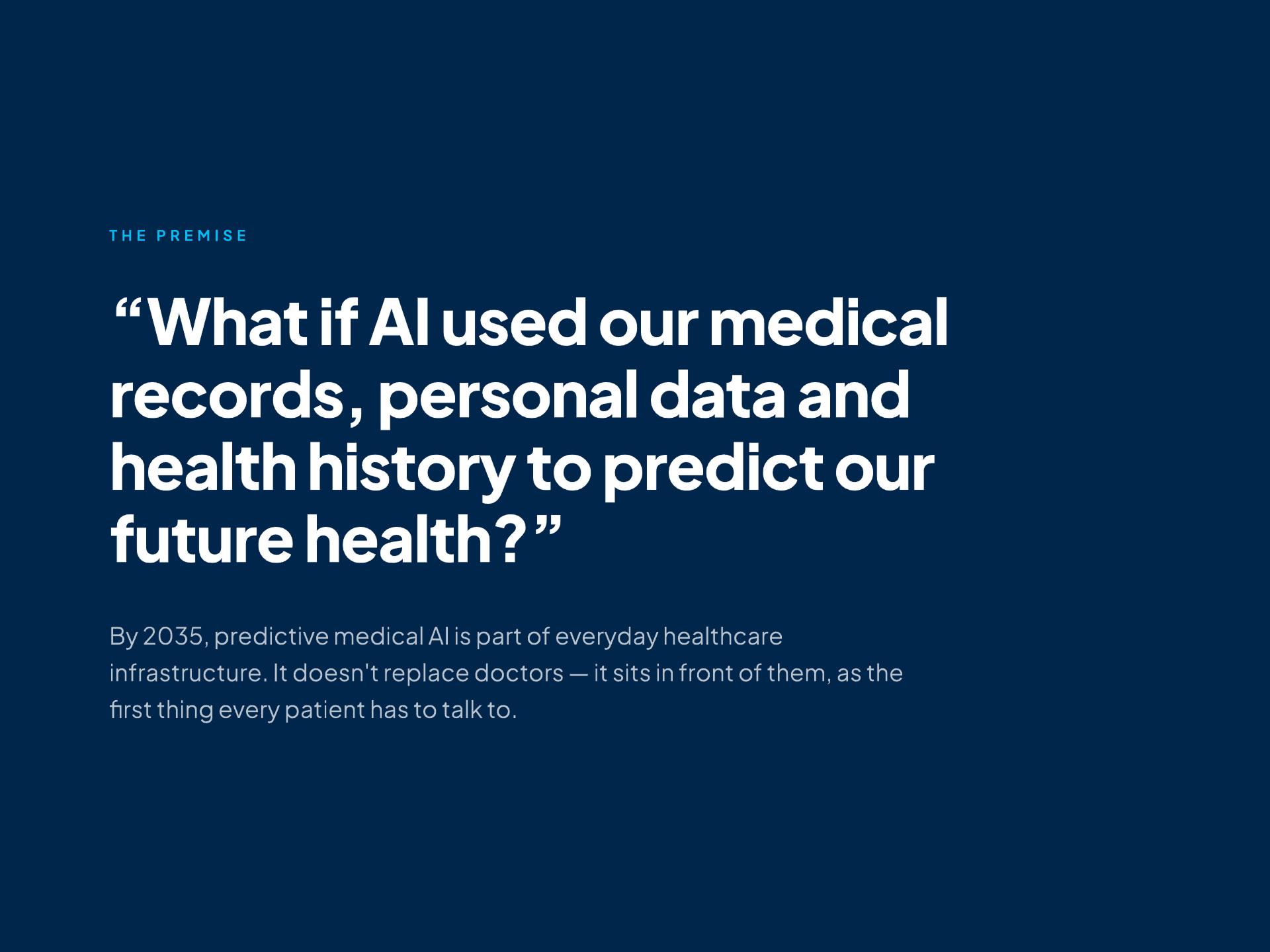
Doctorlib is a design fiction prototype that imagines a near-future healthcare app where AI becomes the first step before seeing a doctor. Set in 2035, the app uses medical records, personal data, and health history to support diagnosis, recommend specialists, and manage appointment access.
The project explores how AI in healthcare could feel helpful and efficient, while also raising questions around surveillance, automated judgement, privacy, and patient autonomy.
Overall Idea
Instead of making the interface look futuristic, Doctorlib was designed to feel familiar and believable, similar to today’s healthcare booking apps. This ordinary visual language makes the fiction more unsettling: the future of healthcare control may not look extreme — it may look simple, trusted, and convenient.


Consent as the Entry Point
Before users can access the app, they are asked to accept a broad data agreement. This sets up the central tension of the project: convenience begins with surrendering control over medical records, lifestyle data, genetic information, and appointment history.

Three Journeys Through One System
The prototype follows three different users to show how the same AI healthcare system can behave differently depending on context. For one person, it becomes a helpful assistant. For another, it becomes a gatekeeper. For the third, it becomes a watcher.
Help That Feels Too Smooth
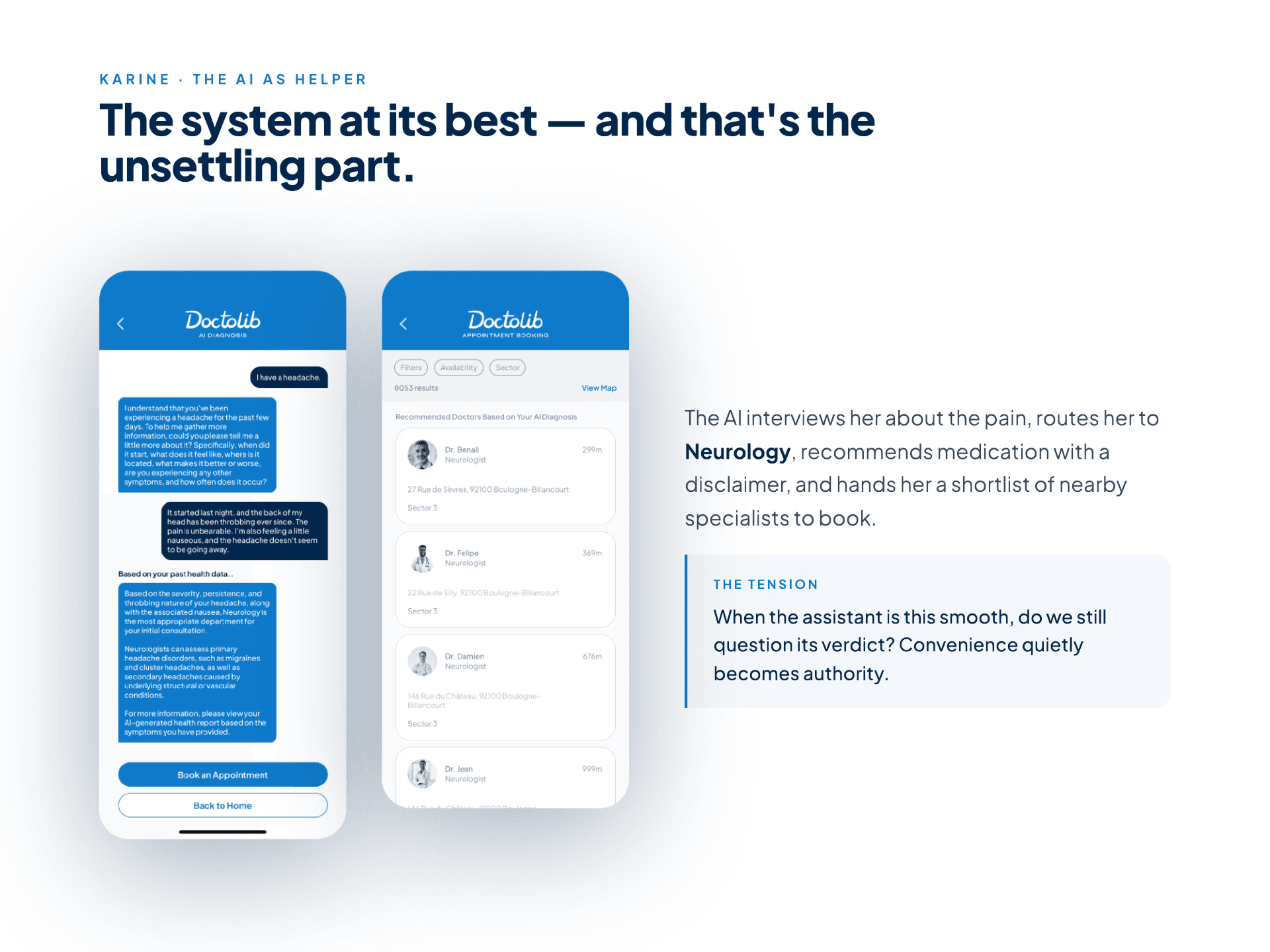
Karine’s flow shows AI at its most useful: it listens, asks follow-up questions, recommends a specialist, and helps her book an appointment. The interaction feels reassuring, but also raises the question of how easily convenience can become authority.
When Care Becomes Policing
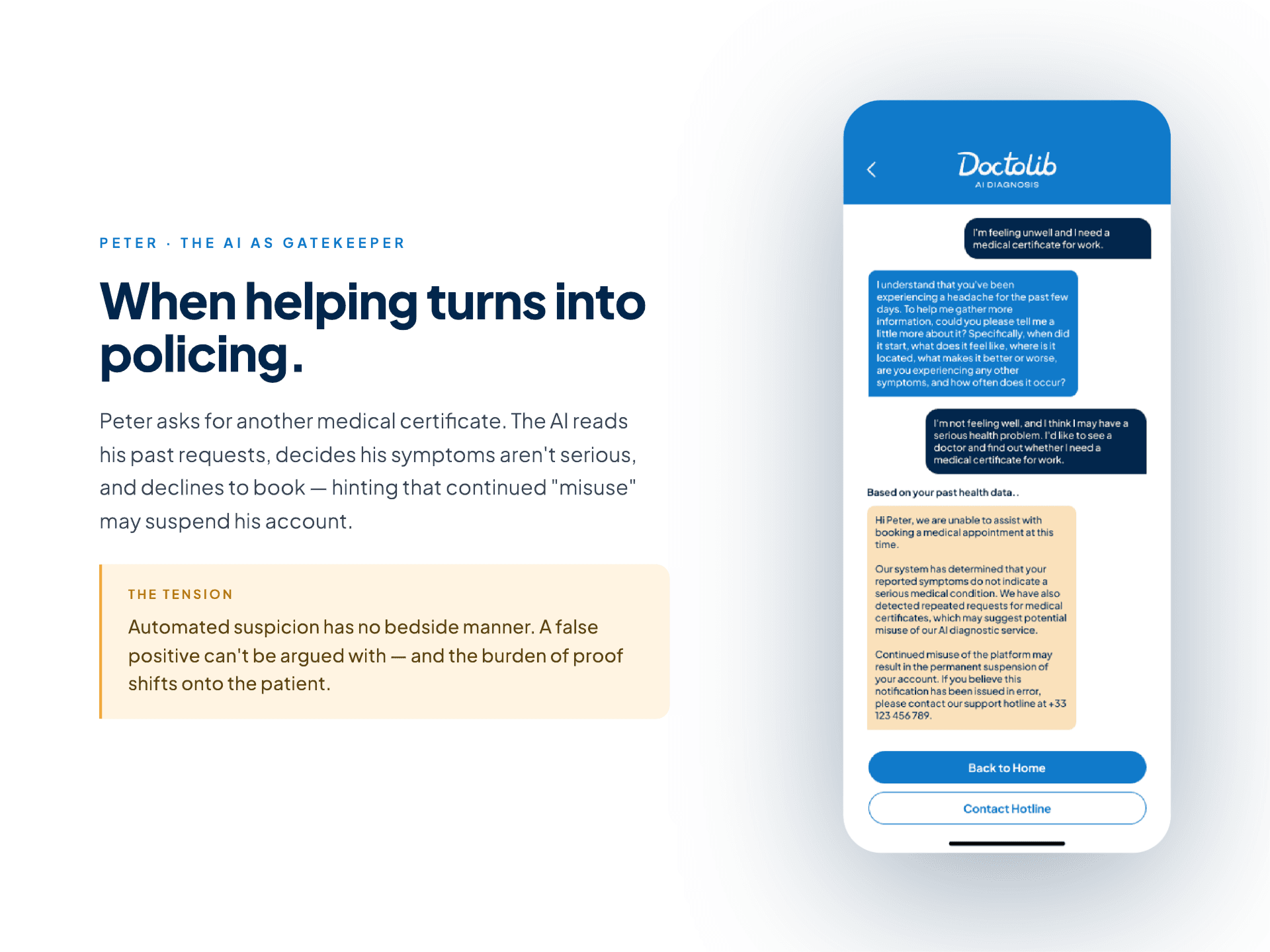
Peter’s flow explores how a healthcare system might begin judging user behaviour. Instead of simply responding to symptoms, the AI checks his past requests and flags possible misuse, shifting the burden of proof onto the patient.
Accessibility Under Surveillance
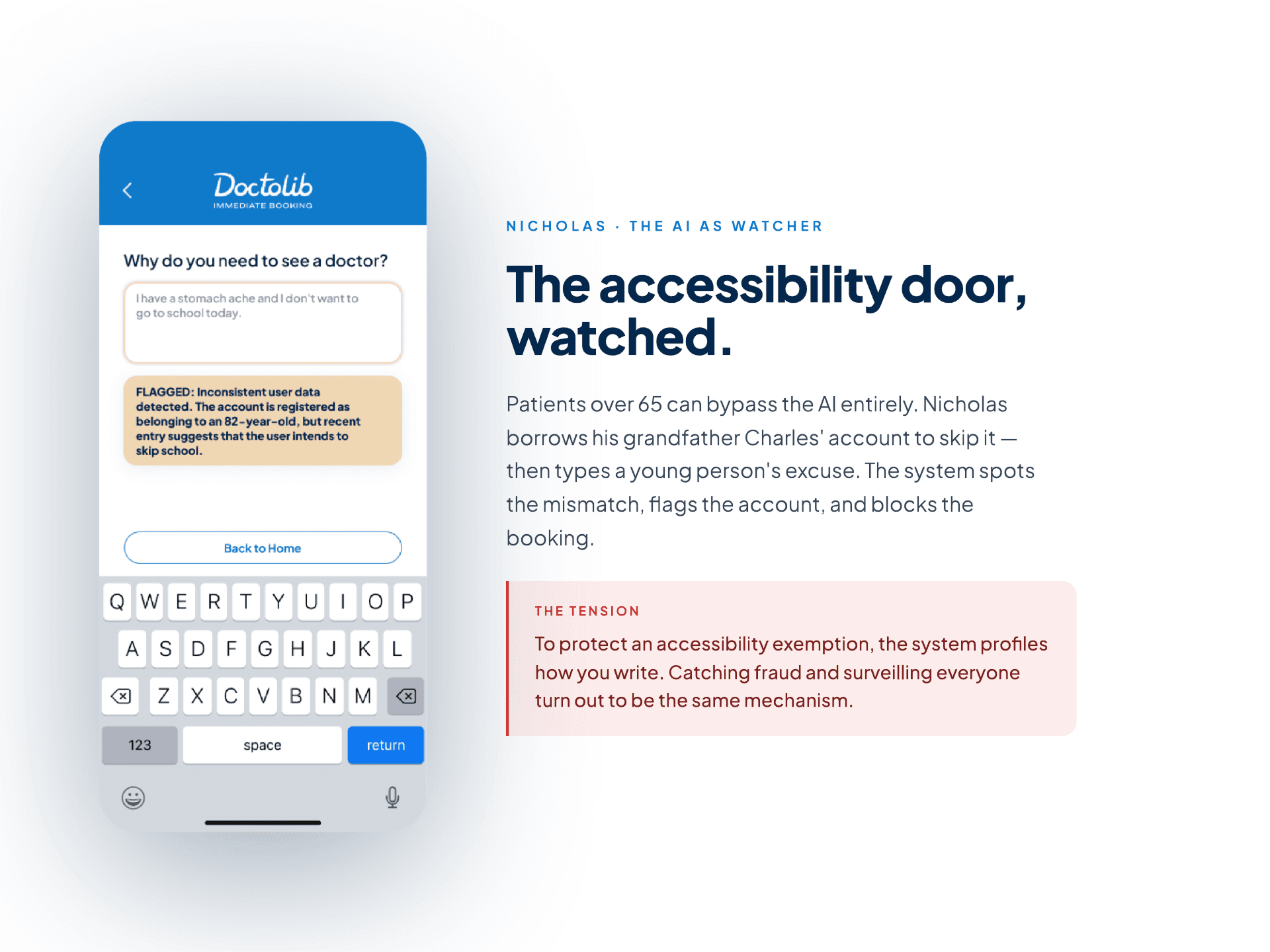
Nicholas’ flow questions what happens when an accessibility feature needs to be protected from abuse. By using his grandfather’s account, he triggers the system’s identity checks, revealing how support mechanisms can quickly become surveillance mechanisms.

Questions Raised
Doctorlib is not designed as a solution, but as a way to make a possible future feel real enough to question. It asks who benefits when AI becomes the first layer of healthcare, who gets delayed, who gets flagged, and how much personal data a system should be allowed to use in the name of care.
Reflection
The project’s most unsettling part is its normality. By making Doctorlib look calm, familiar, and trustworthy, the prototype suggests that future healthcare control may not arrive as something dramatic. It may arrive through interfaces that feel helpful, efficient, and already accepted.

